
Look at any building that was completed five or six years ago. Some still look almost the same as they did on opening day. Others seem much older than they really are. The design may be good in both cases, but the materials often reveal a different picture. A façade deals with a lot over the years. Summer heat, monsoon rain, dust, moisture, and everything in between.
That is why builders spend so much time discussing exterior materials before construction even begins. They know that what works well today should continue working years later. The exterior bison panel is often considered for that reason, especially on projects where durability, design freedom, and lower maintenance are all part of the conversation.
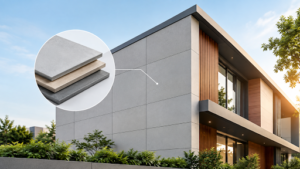
Not long ago, I was speaking with a project engineer who had worked on everything from schools and office complexes to residential developments.
In the middle of the conversation, he said something surprisingly simple.
“Most buildings don’t reveal their quality during handover. They reveal it a few years later.”
The more I thought about it, the more accurate it seemed.
Anyone can walk through a newly completed project and admire the finish. The walls are clean. The paint is fresh. Every surface looks exactly the way it was intended to look.
But buildings are not built for handover day.
They are built for the years that follow.
They sit through scorching summers. They face months of rain. Dust settles on them every day. Moisture finds its way into places people never notice during construction. Slowly, the exterior begins telling its story.
Some buildings handle that journey remarkably well.
Others start asking for attention much sooner than expected.
That is why conversations around façade materials have changed. Architects are no longer looking only at how a material looks on a sample board. They want to know how it behaves after years of exposure. Builders want fewer callbacks. Owners want fewer maintenance headaches.
This shift in thinking has brought greater attention to materials like Exterior Bison Panel, especially in projects where long-term performance is part of the discussion from the beginning.
Ask a group of architects why they continue using a particular material, and you rarely hear a technical answer first.
They usually talk about experience.
Someone mentions a project completed years ago that is still performing well. Another recalls a building that required far less maintenance than expected. Over time, those experiences shape confidence.
That is often how materials earn a place in construction.
The exterior bison panel is a particularly relevant example.
Manufactured using cement bonded with specially processed wood particles, it was developed to meet the practical demands of modern construction. But what makes it relevant today is not simply what it is made of. It is how it performs once it becomes part of a building.
Builders often judge materials differently from how brochures do.
They notice whether a board remains stable through changing seasons. They notice whether surfaces continue looking consistent after years of exposure. They notice whether maintenance teams keep coming back to the same problem.
Those observations matter.
Over the years, Bison Panel has been used across educational institutions, industrial facilities, commercial developments, and residential projects. Not because it follows a trend, but because professionals have seen how it performs in real conditions.
Manufactured by NCL Industries Ltd, it has gradually become part of conversations focused on durability rather than short-term appearance.
A building owner once described maintenance as “the expense nobody budgets for properly.”
There is probably some truth in that.
During construction, most people focus on design decisions, project schedules, and budgets. Very few people spend time imagining what the building will need in five or ten years.
Yet those years matter.
A material that performs consistently often saves far more than it costs.
That is one reason Exterior Bison Panel continues appearing in specifications for modern projects. It supports an approach that prioritises long-term reliability over short-term visual impact.
Another reason is adaptability.
Buildings today are expected to do more than provide shelter. They need identity. They need character. Whether it is a corporate office, a university building, or a residential development, the exterior contributes significantly to how people experience the space.
Architects, therefore, look for materials that support creativity without introducing unnecessary complexity.
The result is a growing preference for solutions that combine performance with design freedom, especially in projects that incorporate modern exterior wall panels as part of the overall façade system.
If there is one thing that treats every building equally, it is the weather.
It does not matter how large the project is or how impressive the design appears.
The sun shows up every day.
Rain arrives when it wants to.
Humidity has its own plans.
Anyone who has managed a property for several years understands this reality.
A façade may perform beautifully during its first year. The real question is how it responds after repeated exposure to changing conditions.
This is where material selection becomes important.
The exterior bison panel has gained recognition. It performs reliably in outdoor environments where moisture, temperature fluctuations, and exposure are unavoidable.
For architects evaluating weather-resistant boards, reliability matters. Nobody wants to revisit a completed project because a material failed to meet expectations after a few seasons.
A façade should not become a recurring concern.
It should quietly continue doing its job.
That may sound simple, but experienced professionals know how valuable such performance can be.
There is a reason facility managers appreciate buildings that rarely need attention.
Their work becomes easier.
Maintenance is not just about money. It involves time, planning, disruption, and resources. Every repair creates additional work somewhere.
This is why many organisations have started looking beyond upfront costs.
They ask different questions now.
How often will the product need maintenance?
How difficult will repairs be?
Will this material create long-term issues?
The Exterior Bison Panel often enters these discussions because of its durability and ability to reduce ongoing maintenance demands.
For schools, hospitals, office campuses, and residential communities, this product can make a noticeable difference over time.
Reliable façade solutions are not always the most prominent part of a project. Yet they often earn the most appreciation once the building is occupied.
The fewer problems a façade creates, the more successful it usually is.
Performance may keep a building functioning, but design is what people remember.
Think about the buildings that stand out in your city.
You probably remember their shape, their texture, or the way the exterior catches the light at different times of day.
That visual identity rarely happens by accident.
Architects spend considerable time selecting materials that help bring a design concept to life.
The Exterior Bison Panel offers flexibility that supports a wide range of architectural approaches. Some projects use it to create clean, contemporary exteriors. Others use it to introduce texture and depth into larger design compositions.
Its versatility has also contributed to the growing use of architectural cladding systems that combine aesthetics and performance.
Today, clients often arrive with reference images, design inspirations, and obvious expectations about how they want a building to look. Materials, therefore, need to support creativity while still delivering practical benefits.
That balance explains why Bison Panel continues to find relevance across commercial buildings, educational campuses, residential projects, and institutional developments.
Backed by the manufacturing expertise of NCL Industries Ltd, it supports modern façade solutions that prioritise both appearance and long-term performance.
A building’s exterior has no choice but to face everything the environment throws at it. Some materials hold up well. Others begin showing their age much sooner than expected. That is why façade decisions are rarely about looks alone.
The exterior bison panel is often considered for projects where durability, design flexibility, and long-term performance are equally important. Years after completion, those qualities can make a noticeable difference to how a building looks and performs.
If you’ve seen a modern building with a neat, well-finished exterior, there’s a good chance a façade material like this was used to create that look.
Take a look around newer office campuses, schools, or residential projects, and you’ll likely spot it somewhere on the exterior. It has become a familiar choice in projects where the façade is expected to remain presentable over time.
Most building exteriors in India face a mix of heat, rain, humidity, and dust. That’s precisely why material selection becomes such an important part of the planning process.
A high-quality façade should look good today and still look aesthetically pleasing years later. That is one reason architects often consider this material.
Exterior Bison Panel is manufactured by NCL Industries Ltd, a company associated with building materials and construction products.